Dec. 23 – March 24
London, UK / Paris, France
Developing an alternative approach for the creation and organization of third places.
Role: Service Design Researcher / Strategist
The initial idea for the project stems from a want to investigate the revival of the riverside guinguette Le Père Tranquille located in a neighboring town to Paris. Through the research and development of this project, I was able to conceptualize an approach oriented third places. This approach focuses on three key elements that allow these spaces to come to life through relevant tools and practices.
Understand
During the first phase the project the goal is to clarify the current context (cultural, political, economic, etc.) to pin point different factors that can affect its development.
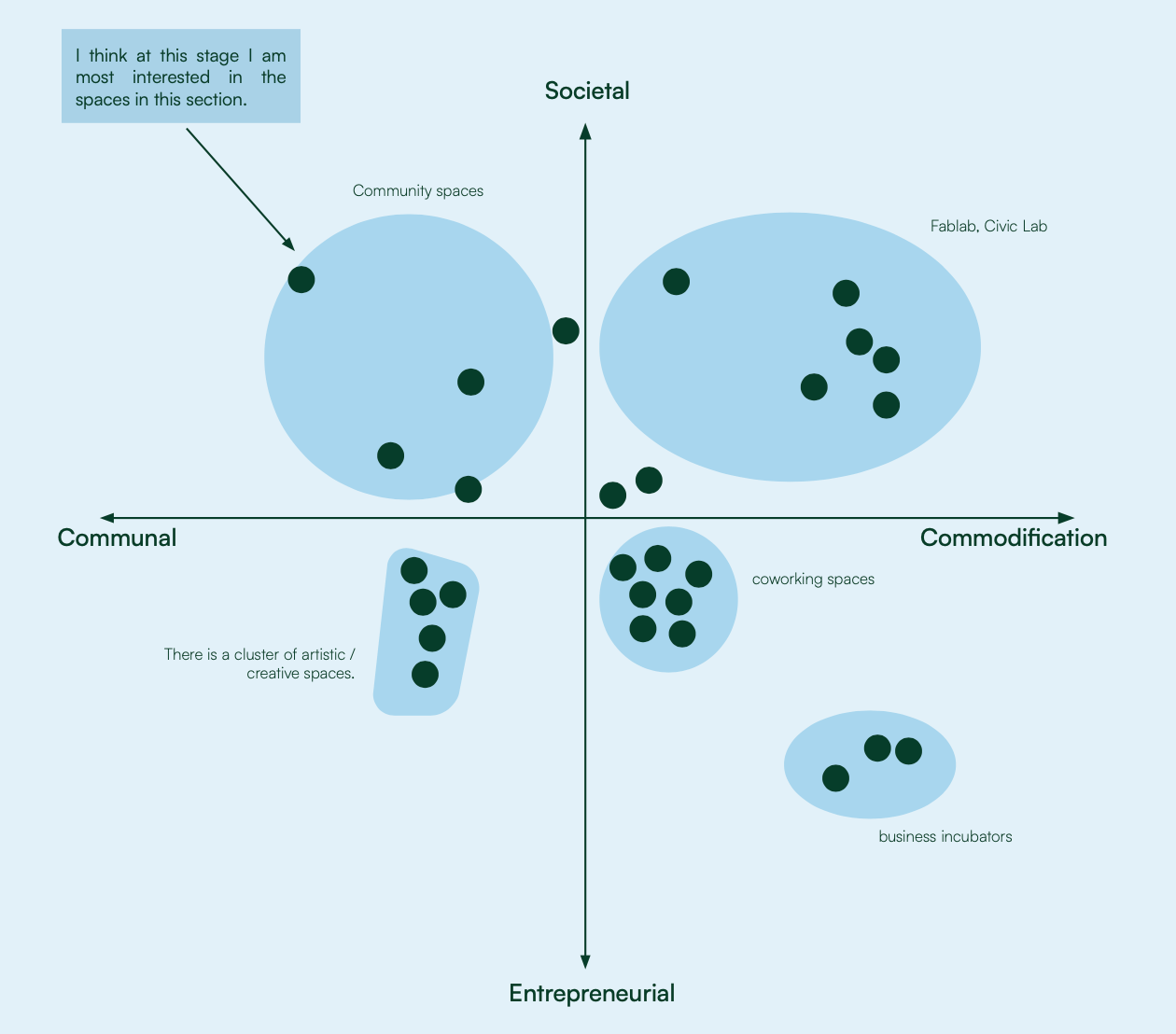
France has seen a rapid growth of third places from 1800 in 2018 to 3500 in 2023 yet in the targeted geographical there remains a lack of such locations. Research into the wider geographical area exhibits a lack of community spaces.
Geographical mapping serves to explore if there is a need for a third place based on similar adjacent spaces. The visual above clearly exhibits that there is a complete lack of such spaces in the targeted geographical area.
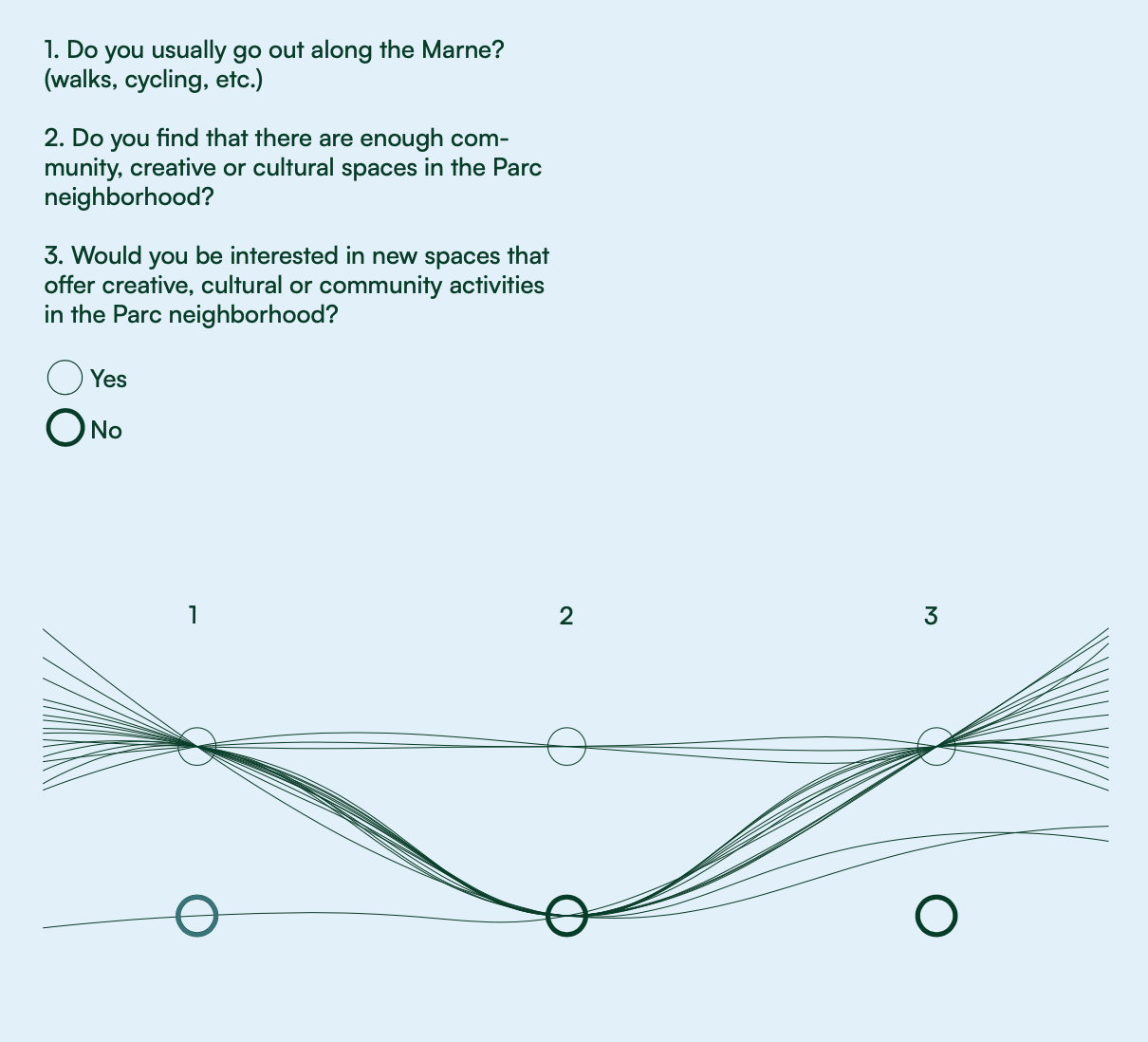
Through user surveys 4 key areas of interest were identified which serve to determine the speculative activities used for prototyping.
A pattern emerges from the responces. Those who usually go out agree that there are not enough community spaces in the neighborhood. These same people would also want to see more such spaces. Even those who feel there are already enough community spaces in the area would still be interested in new spaces.
Which of these activities would interest you if they existed in your neighborhood?
Inquire
The primary research confirms the original insight, that there are not enough communal spaces in the neighbourhood yet there is a high interest.
How might we create a space for the local community that allows for socio-cultural activities?
Prototype
Now that there is a sense of what the community’s interests are, it becomes important to understand how they can be incorporated into someone’s existing schedule. This is a key point as it should not feel complicated to access these activities for the user.
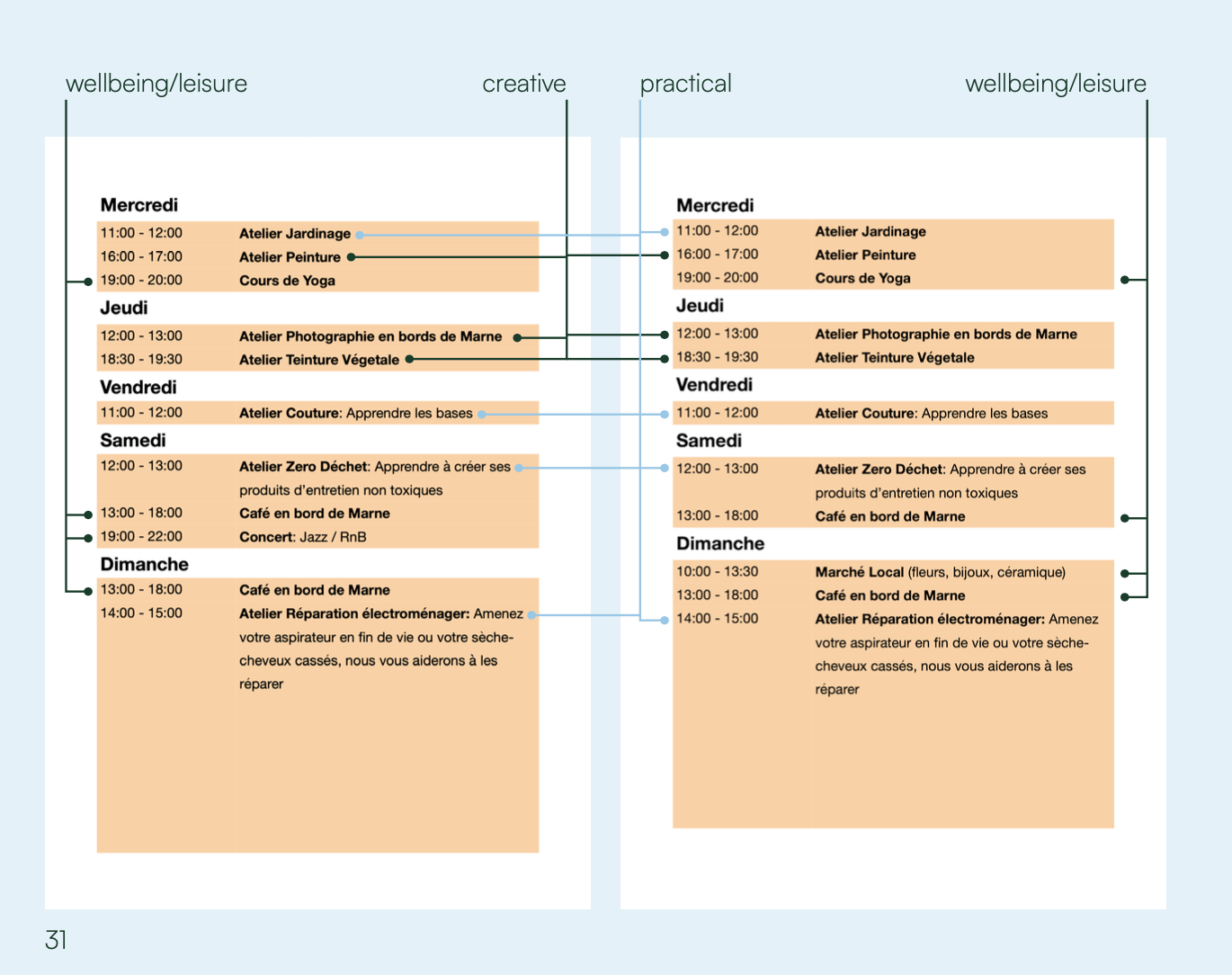
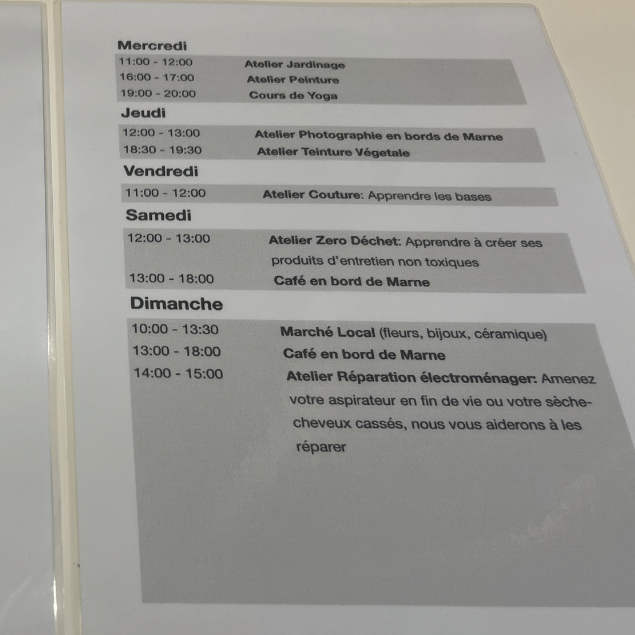
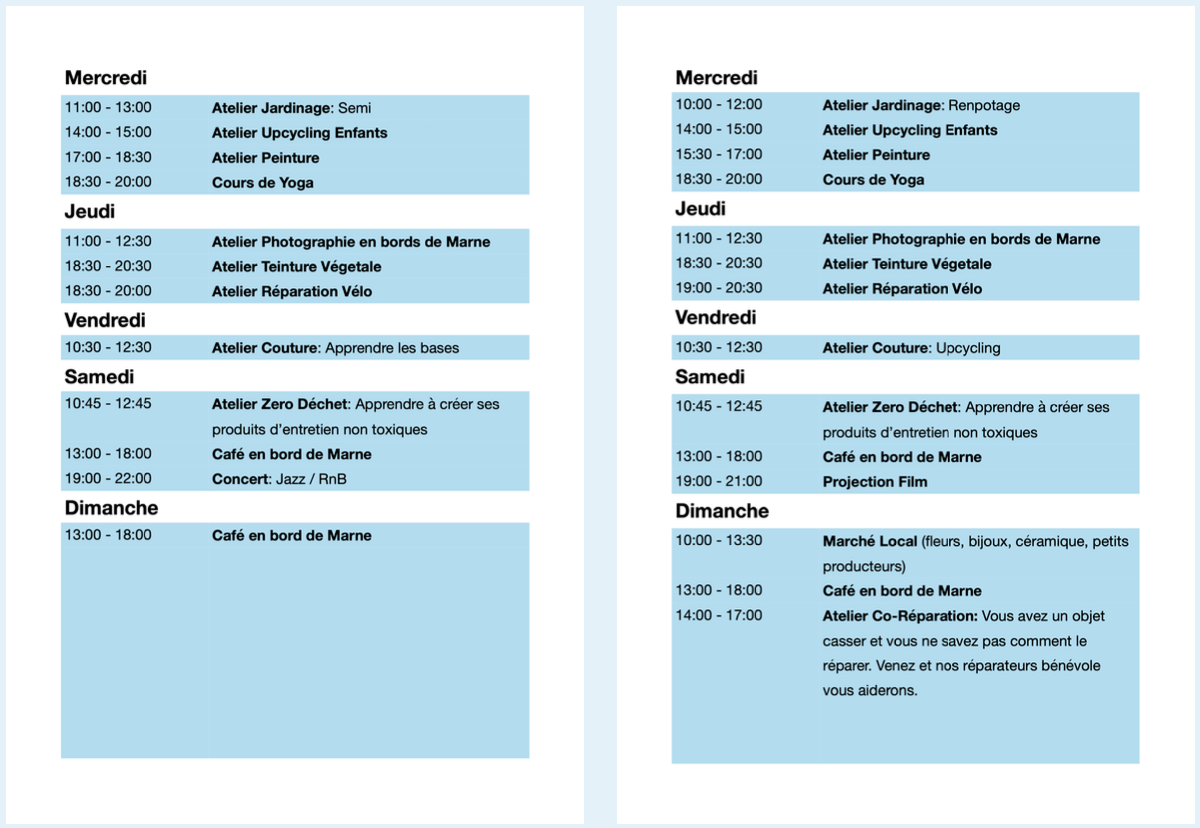
As initial prototype, a speculative weekly schedule was create as a way to model the activities of the space. The incorporated activities are all based the initial survey results and are divided into three categories: 1. wellbeing/leisure, 2. creative & 3. practical.
Test
In order to test the prototype, individual interviews were conducted with community members interacted with the schedule in order to access if the proposed activities met their needs and if they were accessible. The questions were purposefully open ended to prevent any bias.
Implement
With the insights from the interview the schedule was re-designed to allowed for more time in between activities and the activities themselves were prolonged.
The schedule now includes additional activities for children. Gardening and sewing workshops have been centered around one key activity to render them more accessible.
The market offerings are expanded. Yoga classes and zero waste workshops were rescheduled. There is now an opportunity to go watch an indie film on Saturday night.
Activities
The activities are the content present within the third place. Whether this means just getting a coffee or participating in a gardening workshop. Theses are chosen by the users of the space and dictated by the needs of the community.
Network
The network are the people that use or may potentially use the space. They can be users participating in activities and/or they can be organisers who are enabling the activities. It is flexible and changes over time as people come and go.
Place
The place is the catalyst. It provides an area within which the network meets and activities occur. Its design needs to work in tandem with both the network and activities, in a way which facilitates interaction.